You know that feeling when the day is already full, and then your head starts to hurt? Suddenly the work meeting, the grocery run, even a conversation in the kitchen can feel overwhelming.
There's no single trick that works for everyone with migraines. But understanding your personal comfort needs can help you build a more thoughtful routine. Here are seven ideas worth knowing—and one reusable tool some people choose to keep nearby.
It's not "just a headache" when your whole day has to change.

Maybe you've answered "I'm fine" while quietly wondering how you'll get through the next hour. Maybe you've missed a dinner, put your phone away, or retreated to the bedroom while everyone else carried on. Migraine symptoms can disrupt daily activities far beyond head pain. Acknowledging that impact isn't being dramatic. It's the first step toward making space for the kind of support and comfort you actually need.
When light feels unbearable, reducing it can be part of your comfort plan.

For many people, light sensitivity is part of a migraine attack. That's why an ordinary screen, sunny window, or overhead light can suddenly feel hard to tolerate. A dim room, drawn curtains, and a break from bright displays may help you feel more comfortable while symptoms pass. You don't have to power through every stimulus. If your eyes need a break, giving yourself permission to rest can be a practical choice.
Cold can feel comforting—but the right temperature is personal.

A cool compress on the forehead or temples is one simple strategy some people use during headaches. The sensation can be refreshing, especially when you feel overheated or tense. But colder isn't always better: extreme temperatures may be uncomfortable, and everyone's preferences are different. Try short, comfortable periods with a protected cold pack rather than putting something painfully cold directly against your skin.
Gentle, even pressure may feel better than something bulky or restrictive.

Some people find soft, gentle pressure around the forehead soothing; others don't enjoy compression at all. The important distinction is between a comfortable, flexible fit and anything that creates extra pain. A bulky strap or awkward ice pack may demand constant readjusting just when you want to rest. If you experiment with a wearable comfort aid, choose one that feels gentle, sits evenly, and is easy to remove immediately.

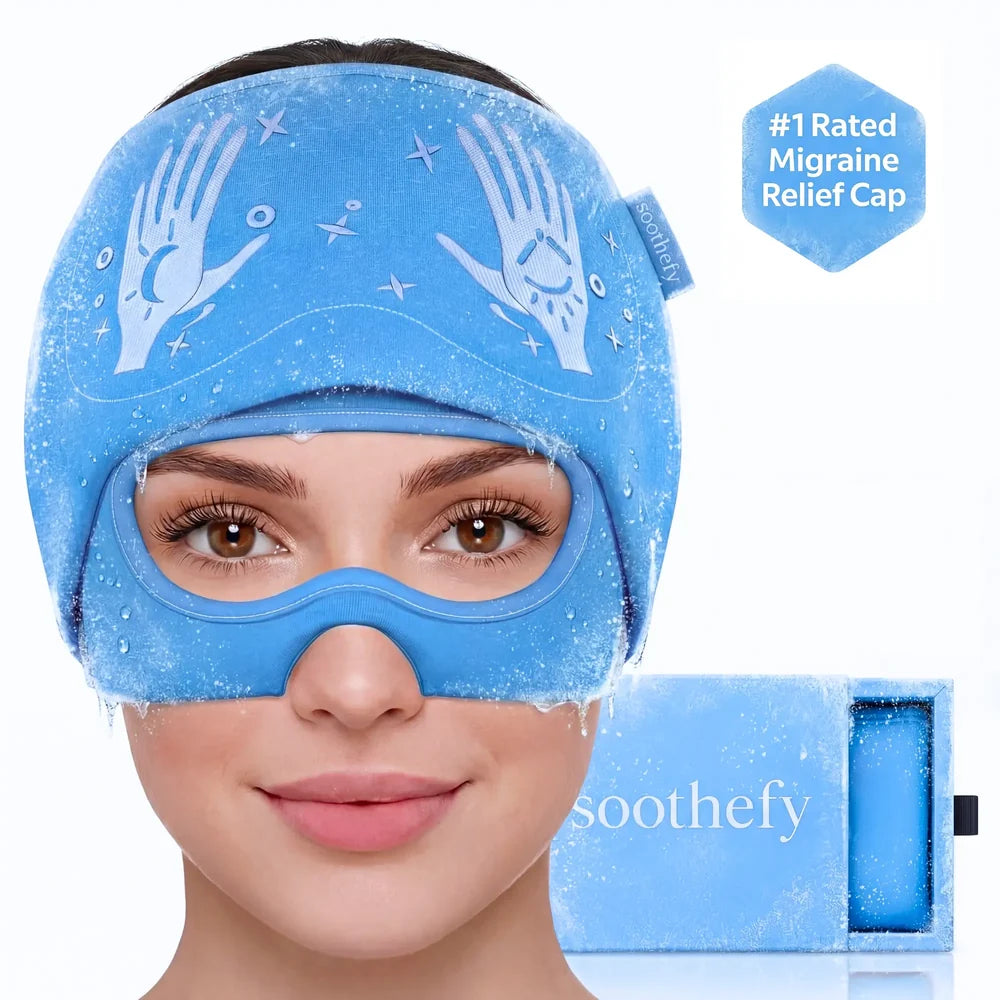
Meet Soothefy.
Reusable cooling gel, soft 360° compression, and adjustable eye coverage in one simple cap.
See How It Works →Having something ready can take one decision off your plate.

When symptoms start, the last thing you may want to do is hunt for a clean cloth, clear a drawer, or figure out where you left the cold pack. Keeping your preferred comfort supplies in a familiar spot can simplify the moment. Think water, a comfortable place to lie down, anything prescribed for your migraine care, and a reusable cooling option if you like one. Preparation doesn't prevent an attack, but it can reduce the effort of responding to it.
Reusable comfort can be simpler than repeating the same setup every time.

There's something appealing about a tool you can use again without purchasing refills, charging batteries, or finding new supplies. A reusable cooling cap is one option for people who prefer a hands-free way to enjoy a cool sensation. The key is practicality: will you actually reach for it when you need comfort? Choose tools that fit your routine, not an idealized version of the day when you have unlimited time and energy.
You deserve a comfort routine that works with your life, not against it.

It's easy to feel guilty about stepping away when you have work to finish or people depending on you. But responding to migraine symptoms isn't a failure of willpower. It's a way of taking your needs seriously. A comfortable room, rest, your recommended treatment, and a cooling aid you enjoy can all have a place in your personal routine. You don't need a miracle promise—just thoughtful options and the freedom to find what suits you.